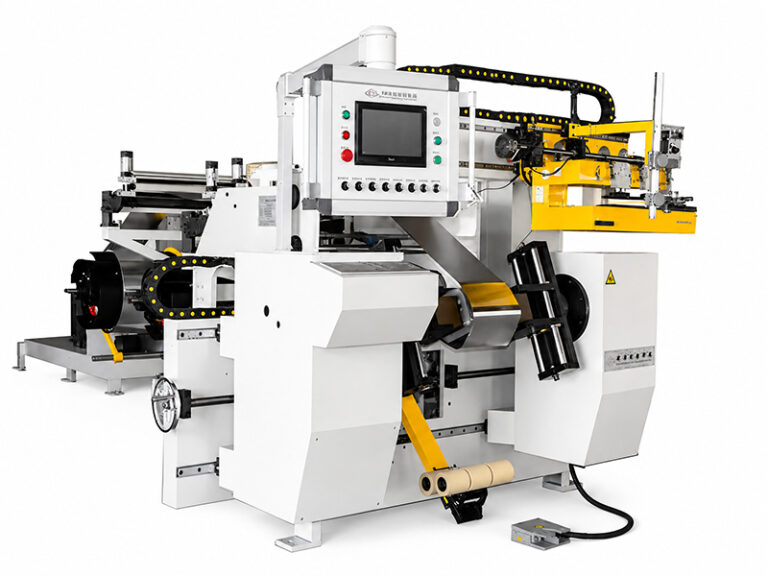

Automation Helps Improve Transformer Coil Manufacturing Efficiency
Automation has become an important development direction in transformer coil manufacturing. In the past, many production steps depended heavily on manual operation, which could lead to unstable quality, low efficiency and high labor intensity. Today, more transformer manufacturers are choosing automatic or semi-automatic equipment to improve production stability.
In coil winding production, tension control is one of the key factors affecting coil quality. If the tension is unstable, the coil may become loose, uneven or difficult to meet technical requirements. Modern foil winding machines and automatic wire arranging winding machines can use servo control, PLC systems and touch screen operation to improve winding precision and reduce manual adjustment.
Automatic functions such as winding control, tension control, counting, power-off memory, automatic stop, welding assistance and positioning can make the production process more efficient. These functions are especially helpful for repeated production of similar coils, because they reduce manual errors and improve consistency between batches.
Automation also helps reduce labor intensity. Operators can control the machine through a user-friendly interface instead of relying on heavy manual work. This is important for manufacturers who want to improve production efficiency while maintaining stable product quality.
For overseas transformer manufacturers, investing in automated equipment can bring long-term value. Although the initial machine investment may be higher than simple manual equipment, the benefits include better production efficiency, lower labor dependence, improved coil quality and easier production management.
Hefei Zhu Tang Technology Co., Ltd. supplies different levels of transformer winding equipment, including economic models, automatic models and customized high-performance models. Customers can choose the most suitable configuration according to their production scale and budget.